
The best kitten food is rich in high-quality, protein-rich ingredients that support growth. Top brands like Smalls fresh bird, Nulo Freestyle/MedalSeries, Purina ONE Healthy Kitten, and Blue Buffalo Healthy Growth. You need a mixture of dry and wet food to keep the balance.
It is not boring to bring home a kitten. What a rogue that little ball of hair is, and ever hungry. The most common question that many new pet owners ask themselves is what is the best food that kittens eat? It is not as easy as taking the first bag of cat food that you come across. Kittens develop at a very rapid rate, and their bodies require the appropriate fuel to aid their growth.
In the first year of its life, a kitten gains muscles, bones, organs, and associations in the brain. Due to this high growth rate, kittens require more energy in the form of calories, protein, and nutrients as compared to adult cats. Giving the child the wrong food slows growth, weakens the immune system, and leads to long-term health problems.
The Importance of Proper Nutrition to Kittens
The kitten is developing faster than at any other stage in a cat’s life. In only a year, a small baby at birth will grow into a mature cat with a weight of a few ounces. That size of growth requires stern nutrition. Raising a kitten does not only involve filling a bowl. It is concerning giving the blocks of a healthy body.
A kitten’s immune system is still in training to protect itself. The right nutrition fortifies the system. Good food aids in combating infections, reducing stress, and supporting organ growth. Kittens without nutrients will become weak or prone to illness.
Breakneck Expansion in the First Year
A cat’s childhood is like childhood in a hurry. There is rapid and continuous growth. Within the first few weeks, a kitten can gain weight by as much as two or even three times. This is a rapid period, which is why nutrition during this period is so critical.
Kitten babies start by sucking the milk of the mother. This milk contains many antibodies, fats, and proteins that safeguard the kitten and aid in early development. In case of orphaned kittens, veterinarians prescribe special kitten milk replacers that are a copy of these nutrients.
Nutritional Requirements for Non-Adult Cats
A common misconception among many first-time pet owners is that kittens can share a meal with adult cats. On the face of it, the cat food may appear like one at various life stages. The truth is quite different. The kittens’ nutrition is special, and adult cat food cannot fully support it.
The largest distinction is protein. Adult cats need protein, and kittens need more since they are developing new tissues daily. Kitten food tends to have more animal protein, which is beneficial in muscle building and organ development.
Important Nutrients for Kitten
It is much easier to choose the best food for the kitten when you are aware of the nutrients that promote their development. Kittens are not in any way miniature cats. Their bodies are continually constructing new tissues, strengthening bone, and forming connections in the brain. For this reason, their diet should include specific nutrients in appropriate proportions.
High-quality animal protein is the most important part of kitten nutrition. Cats are obligate carnivores, implying that their bodies are configured in such a way that they depend on the nutrients present in animal meat. Protein assists in muscle building, tissue repair, and maintenance of a healthy immune system. Kittens cannot develop well without sufficient protein.
Muscle-Building Protein
The most significant nutrient in the diet of a kitten is protein. All actions that a kitten performs, such as jumping, climbing, and running after something, are powered by strong muscles. That is the building block, made of protein, that sustains those muscles.
Cats, unlike humans or dogs, rely heavily on animal protein. Their digestive systems are oriented toward consuming nutrients in meat. The kittens require foods prepared with chicken, turkey, fish, or beef to provide them with amino acids that support their growth.
Healthy Fats to Burn Fat and Build the Brain
As muscles are built with the help of protein, healthy fats are the source of energy that helps a busy kitten to survive. Those who have ever observed a kitten playing know that kittens rarely stay at home. They jump over furniture, run after shadows, and run around the house. All of that activity needs a constant intake of calories.
The best energy source provided in food is fat. Fat, gram-for-gram, contains more than twice as many calories as protein or carbohydrates. This makes it very useful for kittens, since they have small stomachs and can therefore only take in a lot of food at a time.
Fats are essential for brain development, in addition to providing energy. DHA (Docosahexaenoic Acid) is one of the most significant fatty acids for kittens. DHA is an omega-3 fatty acid that helps in the functioning of the brain, in learning ability, and in the development of vision. Most premium kitten diets contain DHA (derived from fish oil).
Critical Vitamins and Minerals
Vitamins and minerals are listed on nutrition labels, but their effect on a kitten’s health is tremendous. These micronutrients aid in all functions, such as bone strength and immune function.
One of the most essential minerals for growing kittens is calcium. It combines with phosphorus to form healthy bones and teeth. Due to the rapid growth of kittens, their bodies need a certain amount of minerals, both accurately. Excess or insufficient calcium may weaken bones, and excessive calcium may disrupt normal skeletal system development.
Wet vs Dry Food for Kittens
The issue of whether wet or dry food is better for cats is one of the most frequently asked questions for new owners. Go into any pet shop, and there will be shelves of either choice. All types have their benefits, and you can make the right choice regarding your kitten’s health and lifestyle based on the variations.
Wet food is highly moist in nature and is usually packed in cans or pouches. Kibble, also known as dry food, contains much less water and is more concentrated. Both may be good nutritional sources when developed to specifications for kittens. The trick is to choose food of good quality that should comply with the dietary standards of a kitten.
Benefits of Wet Kitten Food
Wet kitten food has several advantages that have made it a choice among veterinarians and pet owners. Hydration is one of the greatest advantages. Water is normally added to wet food at a percentage of 7080 percent, and this helps to ensure that kittens are hydrated in the right way.
This is particularly crucial since cats have evolved to be desert animals. They develop a habit of using food instead of water to meet their water needs. Wet food is useful for maintaining kidney and urinary health.
Benefits of Dry Kitten Food
Another common type of food that has been used to feed young cats is dry kitten food, also known as kibble. Although it has lower moisture levels compared to wet food, it has several functional and nutritive benefits.
Convenience is one of the greatest advantages of dry food. Kibble has a long shelf life without refrigeration, and it does not go bad easily when left in the bowl. This can be convenient to the owners who observe free- feeding schedules or those who are not at home due to work schedules.
What Is the Best Alternative to your Kitten?
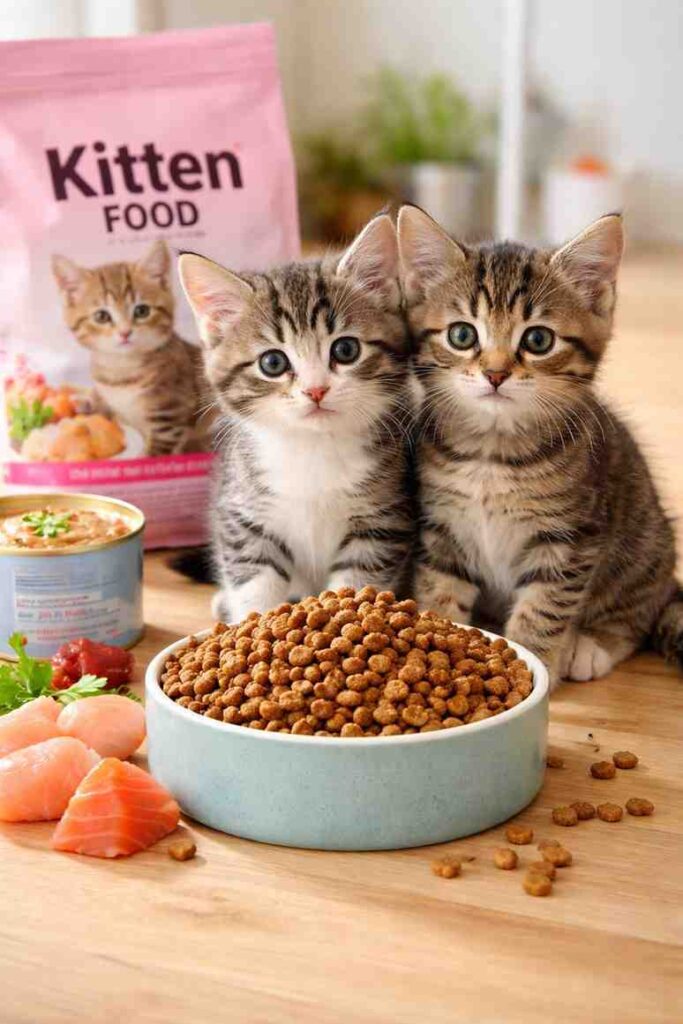
The issue of whether to feed on wet or dry kitten food does not necessarily imply deciding on the expense of the other. In most instances, a mixed type of feeding coupled with both types is the most appropriate solution.
Wet and dry food should be introduced together, where the kitten will get a chance to enjoy the advantages of each choice. Wet food helps in hydration and gives a soft and flavored meal. Dry food brings in convenience, dental benefits, and calorie content.
Top Ingredients to Find in Kitten Food
The quality of the product can be determined to a large extent by the ingredient list on the package when deciding the best food to feed kittens. There are lots of labels of pet food that seem to be amazing, but the truth is based on the ingredients and their arrangement on the label. Knowing what to be aware of will allow you to nourish your kitten to a better extent.
The best ingredient must be animal protein of high quality. Being obligate carnivores, cat bodies presuppose the necessity to use meat-containing nutrients and not plant-based ones. Foods whose primary ingredient is chicken, turkey, salmon, or beef tend to be more nutritious than formula products that feature grains or fillers as a major ingredient.
DHA as Brain and Vision Development
One of the most significant nutrients for the brain of the developing kitten is DHA, or docosahexaenoic acid. This is an omega-3 fatty acid that is important in brain development and in cognition.
Kittens in nature get DHA in the milk of their mother. After they start feeding on solid food, the diet is supposed to sustain them with this vital nutrient. Most high-quality kitten dishes are supplemented with fish oil or algae sources of DHA in order to promote brain development.
Conclusion: Teaching Your Kitten to Eat Healthily
Deciding on the most appropriate food for kittens is among the most significant tasks of the new owner of a pet. The initial months of the life of a kitten define how healthy, active, and developed the animal will be in the future.
The growth of kittens is fast, and they need more nutrients than adult cats. Protein is needed in high quality to aid the growth of the muscle, fats are needed to offer energy and support the brain, vitamins and minerals are needed to build bones and the immune system. These nutrients, when combined, provide the base of a healthy and strong cat.
FAQs
1. What is the frequency of feeding kittens per day?
The meals of young kittens are usually three to four a day since their stomachs are tiny and their energy requirements are high. The frequency of feeding can also gradually be reduced to two meals per day.
2. Is it possible to feed kittens adult cat food?
Adult cat food lacks sufficient calories and nutrients for growing kittens. Feeding them should be attached with food designed to meet the kitten’s specifications until approximately when the kitten is 12 months old.
3. Is homemade food safe for kittens?
Home-cooked diets are very risky unless prepared by a veterinary dietician. Professional advice is hard to get for the proper combination of protein, vitamins, and minerals.
4. At what age are kittens supposed to begin feeding on solid food?
At around four weeks of age, kittens normally start consuming soft, solid food. At this age, wet food or softened kibble assists them in moving from milk to solid food.
5. What is the ingredient of kitten food that is the most important?
High-quality animal protein, which is either chicken, turkey, or fish, is the most significant ingredient. Protein aids in muscle growth, development, and health.